

ThuLEP Surgery
Thulium Laser Enucleation of the Prostate
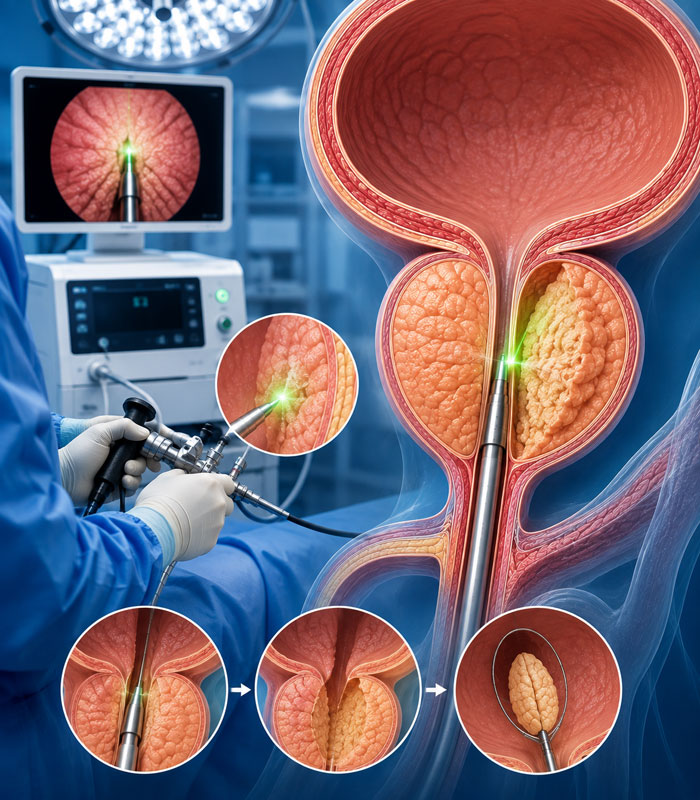
ThuLEP (Thulium Laser Enucleation of the Prostate) is one of the advanced laser surgery techniques used to treat benign prostate enlargement (Benign Prostatic Hyperplasia – BPH). During the procedure, thulium laser technology is used to precisely separate the enlarged prostate tissue from the prostate capsule, thereby removing the obstruction in the urethra.
ThuLEP, a minimally invasive procedure, is performed entirely via the urethra without any incisions to the skin. Due to its low risk of bleeding, rapid recovery and effective results even in cases of enlarged prostates, it is now recognised as one of the key options in modern prostate surgery.
Who is ThuLEP suitable for?
ThuLEP surgery may be recommended in the following circumstances:
Benign prostatic hyperplasia (BPH)
Frequent night-time urination
Frequent urination
Difficulty starting to urinate
Recurrent urinary tract infections
The sensation that the bladder has not been completely emptied
Patients who do not derive sufficient benefit from drug treatment
The development of bladder stones
Medium- and large-sized prostates
Each patient’s treatment plan is determined by a specialist urologist based on the size of the prostate, their general state of health and their symptoms.
The Benefits of ThuLEP Surgery
ThuLEP offers numerous advantages over traditional prostate surgery:
It is a minimally invasive treatment method.
It does not require an incision in the skin.
The risk of bleeding is very low.
It can be safely used in cases of enlarged prostate.
Thanks to precision laser technology, surrounding tissues are preserved.
The length of stay in hospital is short.
It helps you get back to your daily routine more quickly.
It delivers successful results over the long term.
The need for repeat surgery is low.
It may also be considered for patients taking blood thinners, provided they are suitable candidates.
How is a ThuLEP procedure performed?
The operation is carried out under general or spinal anaesthesia.
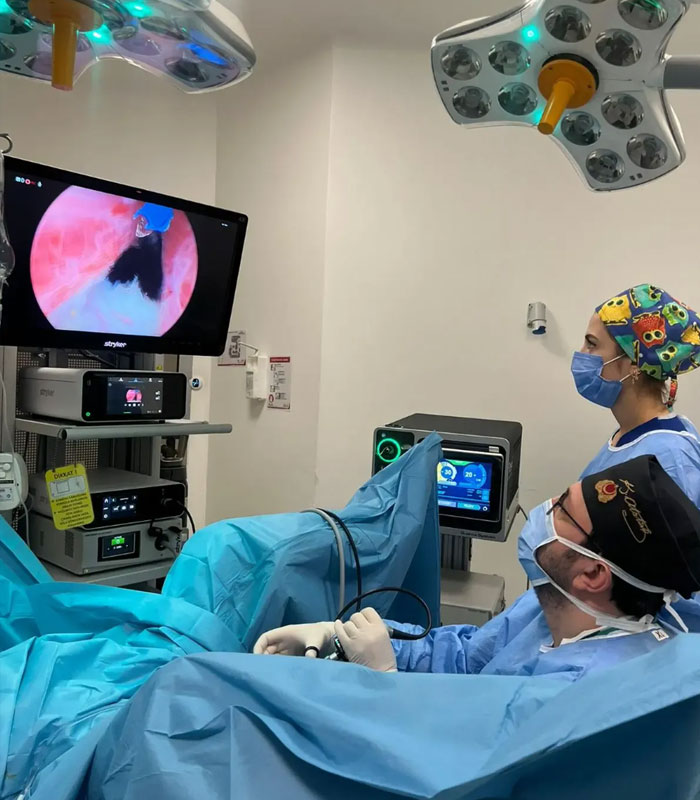
The prostate tissue is accessed using a specialised endoscope inserted through the urethra. Using a thulium laser, the enlarged prostate tissue is carefully separated from the prostate capsule. The separated tissue is drawn into the bladder and broken down into small pieces using a specialised device called a morcellator, before being removed.
Although the duration of the procedure depends on the size of the prostate, it generally ranges from 60 to 120 minutes.Find Out More About the ThuLEP Technique
If you are experiencing problems with urination due to benign prostatic hyperplasia, the ThuLEP technique may be a suitable treatment option for you.
You can contact us to arrange a detailed assessment and find out which treatment method is best suited to you.