

Robotic Radical Prostatectomy Surgery
Robotic radical prostatectomy is one of the most advanced minimally invasive techniques used in the surgical treatment of prostate cancer. In this procedure, the prostate gland, the seminal vesicles (semen sacs) where necessary, and, in suitable patients, the surrounding lymph nodes are removed with a high degree of precision using a robotic surgical system.
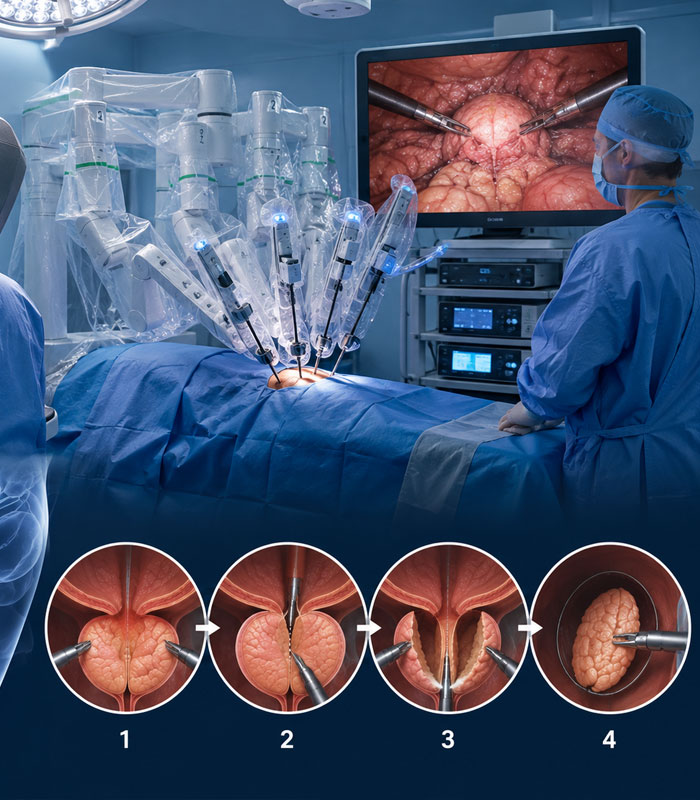
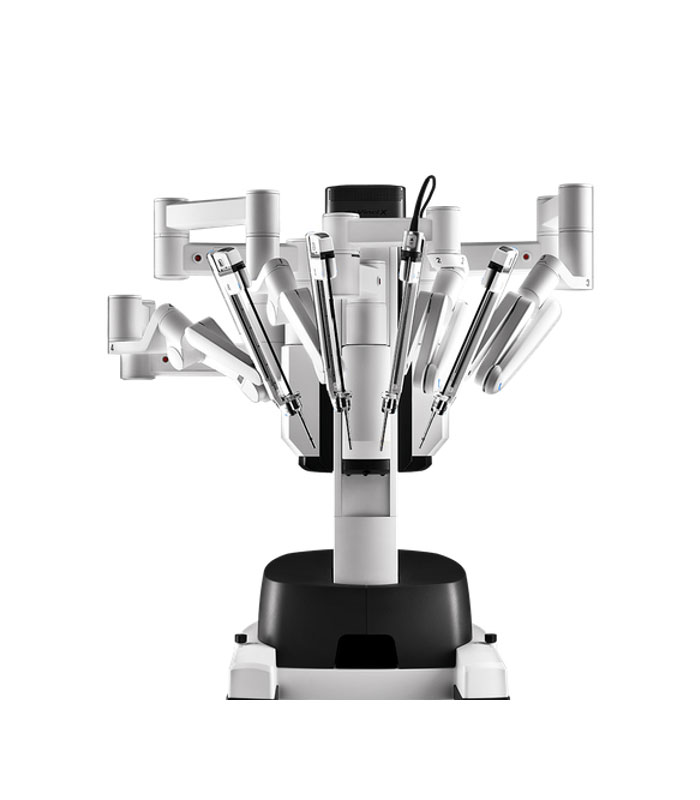
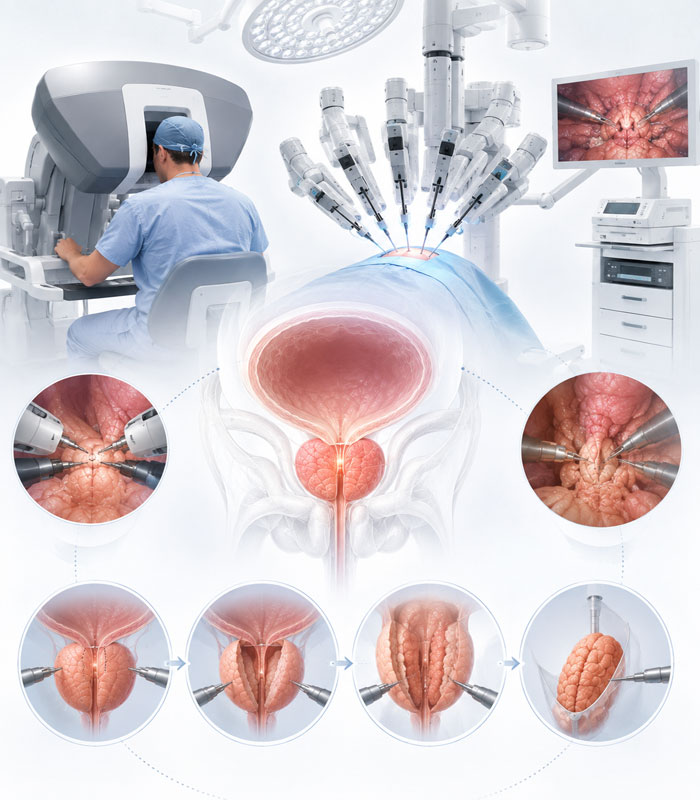
Robotic surgery is performed using specialised surgical arms controlled by the surgeon via a robotic console. Thanks to high-resolution three-dimensional imaging and advanced manoeuvrability, it enables more precise dissection. This aims to improve both cancer control and functional outcomes..
Who is Suitable for Robotic Radical Prostatectomy?
Robotic radical prostatectomy may be a suitable treatment option for the following patients:
Patients with prostate cancer confined to the prostate
Suitable patients with locally advanced prostate cancer
People whose general state of health makes them suitable for surgery
Patients with a long life expectancy
Cases where the aim is to surgically remove the cancerous tissue in its entirety
The treatment plan is determined by taking into account the PSA level, prostate biopsy results, multiparametric prostate MRI, PET/CT scans and the patient’s general state of health.
The Advantages of Robotic Surgery
Robotic radical prostatectomy offers a number of significant advantages over traditional open surgery:
It is applied via small incisions.
It results in less blood loss.
There may be less post-operative pain.
The risk of infection is lower.
The length of stay in hospital may be shorter.
It offers a quicker return to everyday life.
Three-dimensional, high-resolution imaging enables more precise surgery.
It may facilitate the application of nerve-preserving techniques.
In suitable patients, it may help to preserve urinary continence and sexual function.
It leaves smaller surgical scars from a cosmetic point of view.
How is Robotic Radical Prostatectomy Performed?
The operation is carried out under general anaesthesia.
Specialised robotic surgical arms are inserted through several small incisions in the abdominal area. The surgeon controls the operation from the robotic console, separating the prostate gland from the surrounding tissues with a high degree of precision. If deemed necessary, the pelvic lymph nodes may also be removed. Once the prostate has been removed, the bladder and urethra are reconnected, and a temporary urinary catheter is inserted to aid the recovery process.
The duration of the operation generally varies between 2 and 4 hours, depending on the patient’s anatomy and the extent of the cancer.Find Out More About Robotic Radical Prostatectomy
You can contact us to arrange a detailed assessment and find out which treatment method is best suited to you.